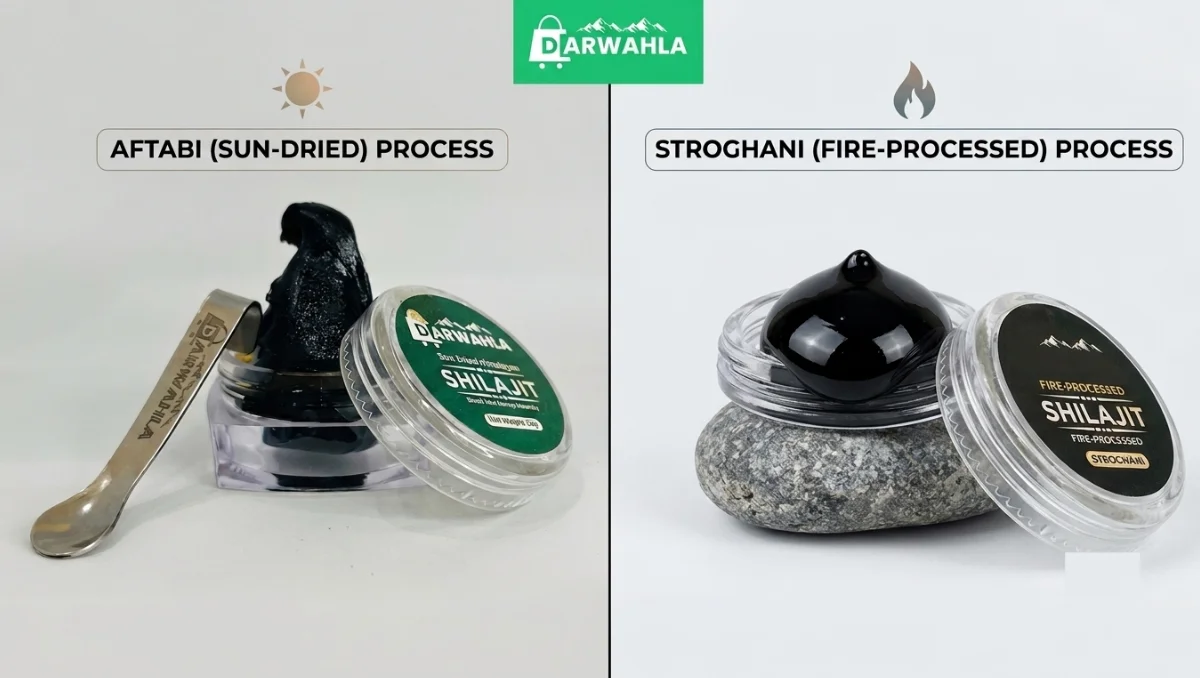
Difference Between Aftabi Shilajit And Stroghani Shilajit
Dar Wahla presents this guide to explain the core difference between Aftabi Shilajit and Stroghani Shilajit for health conscious readers in Pakistan. High mountain regions like Gilgit Baltistan produce these two famous forms. Knowing how sun drying differs from fire heating helps you choose wisely.
This educational guide uses research from the International Journal of Ayurveda Research. It breaks down processing methods, mineral counts, and daily uses.
Understanding Shilajit Extraction In Pakistan
Shilajit flows from high altitude rocks during hot summer months. Raw resin contains organic plant matter and mineral salts. Local experts in northern Pakistan carefully collect this raw material.
Raw resin requires careful purification before human consumption. Dirt and heavy metals must be fully removed. The extraction method changes the final quality completely.
What Is Raw Shilajit Rock Resin?
Raw resin looks like dark, sticky mountain tar. It forms over hundreds of years from decomposed plants. It contains rich fulvic acid and trace minerals.
Unfiltered resin is unsafe for raw daily use. Proper washing with fresh mountain water comes first. This liquid mixture is then ready for drying.
Why Processing Methods Matter
Drying methods alter the delicate bio-active compounds. High heat destroys sensitive vitamins and healthy enzymes. Slow drying preserves natural mountain nutrients much better.
The choice between sun and fire creates two products. Each method yields different textures, colors, and potencies.
How Aftabi Shilajit Is Made Naturally
The word Aftabi comes from Aftab, meaning the sun. This traditional method relies purely on natural solar energy. It is the most patient way to dry resin.
A jar of 20gm pure Aftabi shilajit takes many weeks to prepare. The slow process retains maximum natural goodness.
The Sun Drying Process
Purified liquid resin sits in large flat containers. Workers place these pans under direct summer sunlight. Water evaporates slowly over forty to sixty days.
No artificial heat touches the pure resin mixture. The sun gently hardens the thick black paste.
Key Properties Of Aftabi Resin
Solar dried resin maintains a shiny black appearance. It smells like fresh earth and high mountain rocks. It dissolves smoothly in warm water or milk.
- High concentration of natural fulvic acid.
- Rich gold and silver trace mineral profile.
- Soft texture that hardens in cold temperatures.
- Retains delicate temperature-sensitive plant compounds.
How Stroghani Shilajit Is Prepared
Stroghani means dried using direct fire or cooked heat. This modern approach speeds up total production time. It helps produce larger quantities much faster for markets.
The Fire Heating Method
Purified resin water goes into large metal pots. Constant wood or gas flame boils the water away. The process finishes in just a few hours.
High heat causes rapid liquid evaporation and thickening. Workers stirs the hot paste continuously to prevent burning.
Distinct Features Of Stroghani Resin
Fire dried resin looks dark grey or dull black. It often carries a mild smoky or roasted aroma. The texture feels hard and firm at room temperature.
- Rapid production cycle for fast market distribution.
- Lower moisture level than sun dried batches.
- Slightly altered mineral structure due to high heat.
- Firm texture that stays hard in warm weather.
Key Difference Between Aftabi Shilajit And Stroghani Shilajit
Comparing both types shows clear differences in overall quality. Dar Wahla outlines these key factors for smart buyers.
Processing Temperature And Duration
The major difference between Aftabi Shilajit and Stroghani Shilajit lies in drying heat. Aftabi relies on low solar heat under 45 degrees over two full months.
Stroghani uses intense fire heat above 100 degrees. It finishes completely within a single day.
Nutrient Retention And Fulvic Acid
Sun drying protects delicate organic acids and minerals. Research show higher fulvic acid levels in solar batches.
Fire heating degrades heat-sensitive organic plant matter. This structural difference between Aftabi Shilajit and Stroghani Shilajit impacts overall mineral potency.
Texture, Aroma, And Physical Appearance
Aftabi remains glossy, semi-soft, and rich in earthy scent. It melts easily between warm human fingers.
Stroghani feels hard, brittle, and smells slightly smoky. It requires more effort to dissolve in liquid.
Research Comparison Data
Data based on studies from the International Journal of Ayurveda Research shows clear variations.
| Factor | Aftabi Method (Sun) | Stroghani Method (Fire) |
| Preparation Time | 40 to 60 Days | 4 to 8 Hours |
| Drying Temperature | 35°C to 45°C (Natural) | 100°C+ (Direct Flame) |
| Fulvic Acid Level | High (50% to 60%) | Moderate (30% to 40%) |
| Aroma Profile | Natural Earthy Scent | Smoky or Cooked Scent |
| Bio-availability | Superior Absorption | Standard Absorption |
Health Benefits For Daily Wellness
Both forms offer essential minerals for energy and health. However, the solar processed version yields stronger results.
General Energy And Mineral Support
Pure mountain resin contains over 84 ionic trace minerals. It helps combat daily fatigue and supports stamina. It aids nutrient transport across human cell walls.
Regular use supports overall vitality and healthy immunity. It helps balance daily stress levels naturally.
Specific Health Advantages For Women
Many people ask about shilajit benefits for female health balance. Resin provides iron which supports healthy red blood cells.
- Supports natural bone density and joint flexibility.
- Helps regulate monthly hormonal balance naturally.
- Promotes healthy skin collagen and hair strength.
- Boosts overall daily energy without synthetic caffeine.
A single 20gm pure Aftabi shilajit container lasts weeks. Using a pea-sized portion daily brings optimal wellness support. Women across Pakistan use it for natural vitality.
Studies highlight notable shilajit benefits for female vitality routines. Gentle sun-dried resin remains the preferred traditional choice.
Evaluating The Difference Between Aftabi Shilajit And Stroghani Shilajit At Home
Testing resin at home helps verify overall quality. Simple tests reveals processing style and purity levels.
The Water Solubility Test
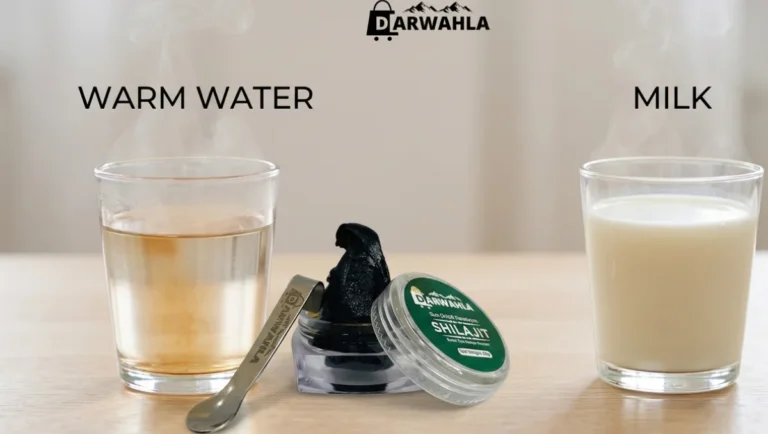
Place a tiny resin drop into warm water. Pure Aftabi dissolves completely without leaving any residue. The water turns a clear golden-brown color.
Fire-damaged resin may leave tiny dark specks behind. It dissolves much slower than sun-dried paste.
The Temperature Reaction Test
Place a small resin piece inside your refrigerator. True Aftabi hardens quickly when exposed to cold.
Warm the hard resin inside your closed hand. It should soften into a pliable paste smoothly.
Usage Guidelines And Proper Dosage
Using correct amounts ensures safety and steady results. Dar Wahla recommends starting with very small portions.
Recommended Daily Serving
Take a portion equal to a green pea grain. That equals roughly 250mg to 500mg per serving.
Mix the portion into warm milk, tea, or water. Stir until the paste dissolves into liquid completely.
Best Time For Daily Consumption
Drink your serving early in the morning on an empty stomach. You can also take it right before workouts.
Avoid taking resin late at night before sleep. Its natural boosting power might keep you alert.
Conclusion
Understanding the true difference between Aftabi Shilajit and Stroghani Shilajit helps you make smart choices. Solar-dried resin takes longer to make but keeps its full natural power. Fire-heated versions offer a faster, cheaper option with lower fulvic acid levels.
Choosing sun-dried resin ensures maximum mineral absorption for daily wellness. Pure mountain gifts work best when processed with patience and tradition. The real difference between Aftabi Shilajit vs Machine dried Shilajit shines through in long-term natural benefits. Explore authentic local wellness options to support your healthy lifestyle goals naturally.
FAQs
What is the main difference between Aftabi Shilajit and Stroghani Shilajit?
Aftabi is dried slowly under natural sunlight over two months. Stroghani is boiled quickly using direct fire heat. Sun drying preserves higher levels of active minerals and fulvic acid.
Which shilajit type is better for overall health?
Aftabi shilajit is considered superior for daily health goals. Its low-heat solar processing retains heat-sensitive organic compounds. It provides better bio-availability and higher fulvic acid content than fire-heated resin.
How can I identify pure Aftabi shilajit visually?
Pure Aftabi has a shiny black surface and soft texture. It melts easily between warm fingers and smells earthy. It dissolves completely in warm water without leaving sticky residue behind.
Can women consume Aftabi shilajit safely every day?
Yes, women can safely take pea-sized daily doses of pure resin. It supports natural energy, iron levels, and hormonal balance. Always consult a medical professional before starting any new wellness routine.
Why is Aftabi shilajit more expensive than Stroghani?
Aftabi requires two months of patient sun drying and manual care. Stroghani takes only a few hours to prepare over fire. The lengthy solar process creates higher demand and lower total supply.